Contacts

296 Reraon St., Brgy. Little Baguio, San Juan City, Metro Manila

info@m2cfoundation.com

+63 917 651 1642

Category: NEWS

Performance Report 2025

2025 is a year of strengthening connections and advancing a shared vision for impact. As we continue to build sustainable pathways for change, we reflect on the milestones, partnerships, and initiatives that have shaped our journey. Explore how Move to Change has grown and evolved through the past year in our Performance Report.

Performance Report 2024

2024 was a year of creating new connections and deeper bonds. As we step into new ventures for 2025, we share with you the events that has made our 2024. Read more about Move to Change’s 2024 in our Performance Report.

Changemaking Education: Enabling the Youth To Become Agents of Positive Change

Changemaking Education is an approach where students are empowered to create positive change in their communities. In this approach, they are equipped with knowledge and skills on empathy, teamwork, collaboration, leadership, and creative problem solving.*

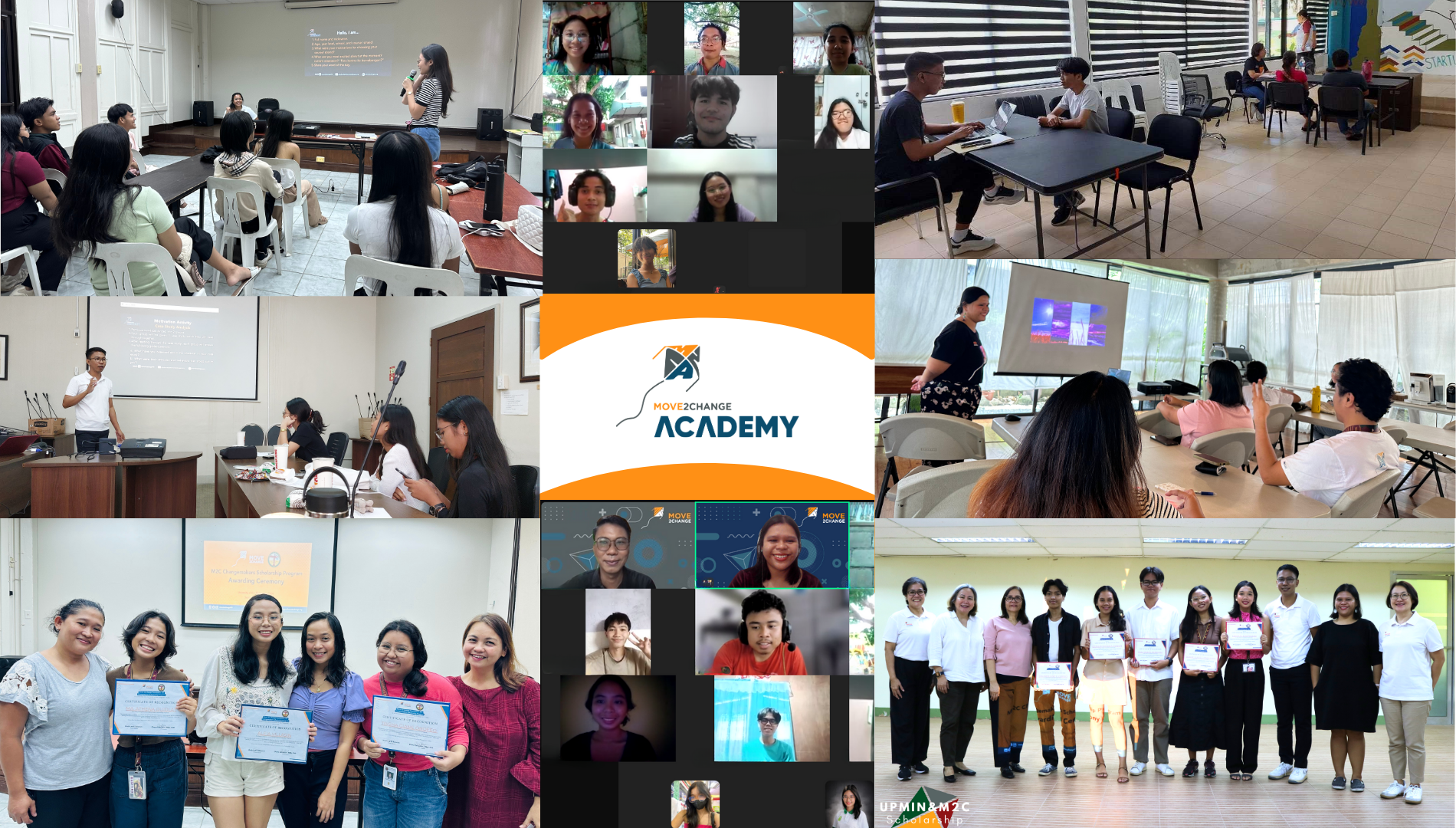
At Move to Change Foundation Inc., our Changemakers Scholarship Program (CSP) enables our scholars to be equipped with the skills to become Changemakers and enact change in their communities. 

Scholars from Manila, Cebu, and Mindanao were carefully selected with partner institutions based on their economic condition, character, and their eagerness to contribute to the community and the country. After this process of student and parent interviews and screening, selected scholars are awarded the scholarship that will support their studies financially. Moreover, these scholars will undergo a changemaking orientation where they will gain skills needed to create a changemaking project. 

The scholarship program aims to have scholars create changemaking projects that will impact their communities positively. In the process, the organization also aims to teach the selected scholars ways to make their changemaking sustainable by introducing the concept of social entrepreneurship. This scholarship program does not just financially support the scholars, but they are also capacitated and empowered to bring change in the issues they see in their community. 

This International Day of Education, we, at Move to Change envisions a world where the youth are capacitated early to become agents of change. We envision a future where the youths have the capacity and the skills to take on issues that are affecting their communities and issues that they are passionate about. 

Let us move together to create a future where our youths are empowered to be the change they want in this world. #


List of References:

 *Changemaker Education | Ashoka Canada. (2024, August). Ashoka Canada. https://ashokacanada.org/programs/changemaker-education/

Written by April Grace Garcia (Team Member for Social Media and CSP)

Guided by Mark Lee Babaran (CSP Prime Mover)

Urban Agriculture: A possible solution to our food woes

Urban Agriculture: Defined

Urban farming involves the cultivation, processing, and distribution of agricultural products, both food or non-food.1 It happens when spaces in the urban areas are utilized to plant crops for various uses.

When animal products are also produced, this process is now called Urban Agriculture. The Department of Agriculture – Agricultural Training Institute defines urban agriculture as the “process of growing, processing, and distribution of food crops and animal products, by and for the local community, within an urban environment.” 2

Urban Agriculture has various production strategies such as edible landscaping, container gardening, vertical gardening, hydroponics, aquaponics, and aeroponics. All of these strategies can be done in small idle spaces in urban areas given the proper materials and equipment to start farming.

The Pandemic Effect: Home Gardening and Community Pantries 

During the height of the pandemic, people had a hard time accessing markets and grocery stores due to the strict barangay lockdowns. This brought community pantries to life where people would be able to have access to produce in their very own communities without the need to travel far.

Those who have spaces at home have turned to gardening as a hobby. Some started with ornamental plants like succulents or monstera to pass time. Others tried their hand in planting seeds they got from the vegetables they ate at home. They were able to produce herbs and vegetables that they can use as additional ingredients to their meals. As long as there is sun, soil, water, and someone that is willing to take time to tend to the plants’ needs, the earth will give back to its caretaker. 

For some gardeners, drums and big pipes helped them create vertical tower gardens where they are able to produce vegetables. Aquaponics, on the other hand, enabled people to produce plants and grow fishes at the same time. Giving not only greens or vegetables, but also fish for food.

Aside from the emergence of personal gardens and mini-farms in the urban setting, the government has also intensified its efforts to push for urban agriculture as an aid to the problems of food accessibility.

Urban Farming Initiatives

Community gardens in local government units (LGU) like the “Joy of Urban Farming” Initiative by the Quezon City (QC) LGU3or the urban farm initiative of Homeless People’s Federation in Payatas4 are being supported by the government5 as it is seen to help food security in their communities.

These efforts by the QC LGU have enabled them to reach 1,026 urban farms in their various communities. This involved giving tax exemptions for idle lands when owners would utilize these lands for urban agriculture. This has also provided livelihood opportunities for 25,000 urban farmers in the city. Thus, idle lands are utilized and people with farming skills are also given opportunities to work.

Schools are also urged to follow the Gulayan sa Paaralan Program (GPP) where teachers, staff, and students will create spaces where vegetables can be grown and later be used for the schools’ feeding program and as possible income generation for schools.

All of these initiatives hope to use available spaces in the LGUs and schools to raise crops that could provide sustenance for the children and the community. 

Move To Change’s Role in Aiding to Food Security

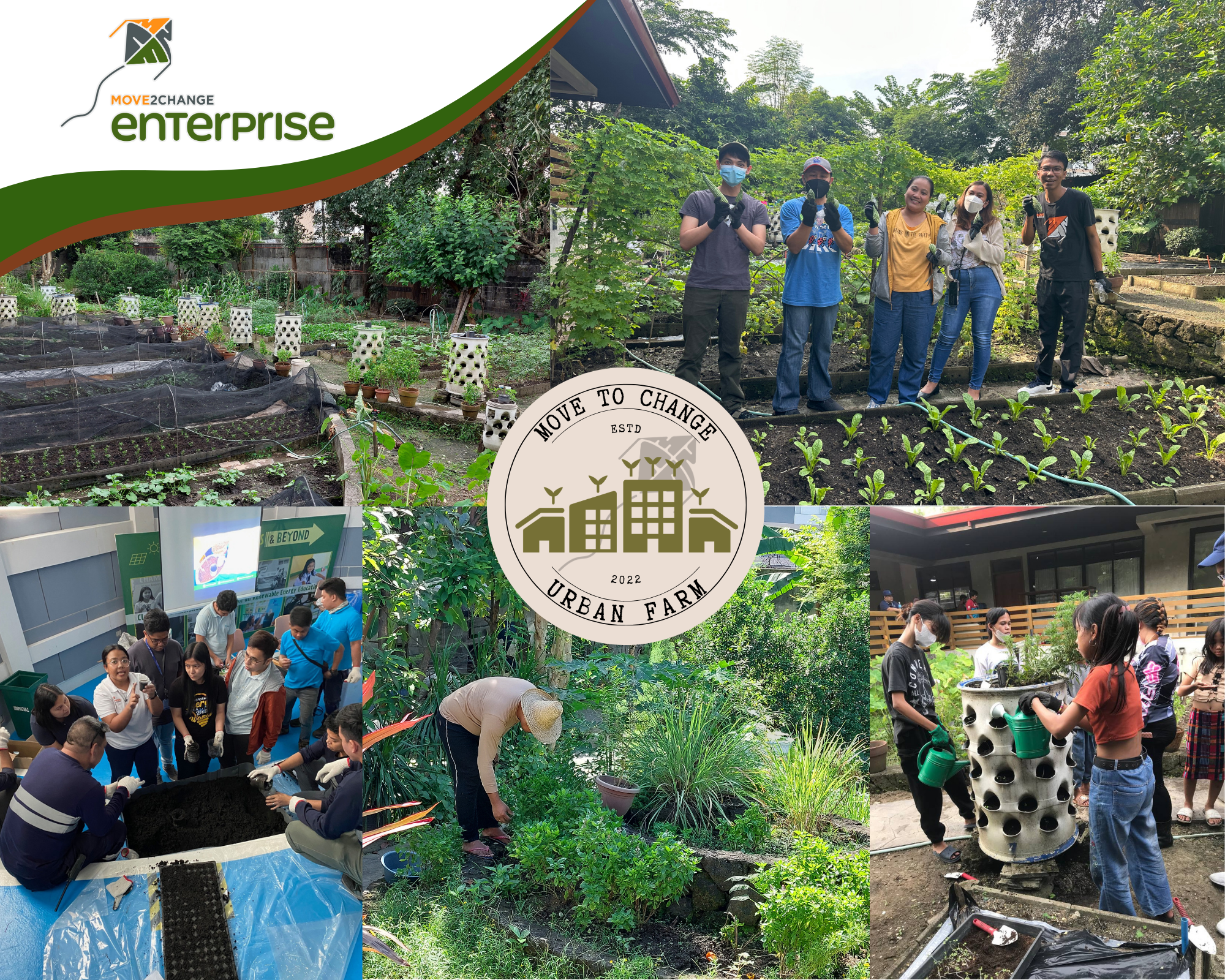
Move to Change Foundation, Inc. as an organization also hopes to aid in the country’s growing food insecurity. Through its Urban Farm in the heart of San Juan City, members and partners of Move to Change are learning the best practices of urban farming.

As we learn to take better care of our Urban Farm, we also get first-hand experiences of best practices that we can include in our farming training to teach others how to start food production at home or in their office spaces.

This sharing of knowledge does not just revolve on the actual farming itself. We also aim to raise awareness on the state of agriculture in the country. 

We hope to create more people who are skilled in producing food that may also aid in producing food for their families and their communities.

Other past programs of Move to Change involved advocating for the youth to be more involved in agriculture through the Youth 4 Agri Campaign and the push for people to try out farming through our Volunteers’ Farm Day.

If you are interested in learning more about our Urban Farm programs and trainings: you may email us at: urbanfarm@movetochange.org

Together, let us plant seeds for a country where no one gets hungry. Let us be equipped to be self-sustaining by learning to produce food in our communities.#


-Written by April Grace Garcia (Team Member: CSP and Social Media)

– Guided by Mark Lee Babaran (Urban Farm Prime Mover)

References:

  1. United States Department of Agriculture. (n.d.). Urban Agriculture | National Agricultural Library. Www.nal.usda.gov. https://www.nal.usda.gov/farms-and-agricultural-production-systems/urban-agriculture ↩︎
  2. (n.d.). A Guide to Urban / Home Gardening [Review of A Guide to Urban / Home Gardening]. ATI2.DA.gov.ph; Agricultural Training Institute Cordillera Administrative Region- Department of Agriculture. https://ati2.da.gov.ph/ati-car/content/sites/default/files/2022-12/urban_agriculture_for_lowland.pdf ↩︎
  3. Mateo, J. (2024, January 22). Quezon City now has 1,026 urban farms. Philstar.com. https://www.philstar.com/nation/2024/01/22/2327563/quezon-city-now-has-1026-urban-farms ↩︎
  4. Bagotlo, O. (2021, July 27). We also want greens in our meals: community gardens in the Philippines. International Institute for Environment and Development. https://www.iied.org/we-also-want-greens-our-meals-community-gardens-philippines ↩︎
  5. DA intensifies urban agri through community gardening. (2021, July 2). Official Portal of the Department of Agriculture. https://www.da.gov.ph/da-intensifies-urban-agri-through-community-gardening/ ↩︎

Performance Report 2023

The year 2023 for Move to Change is a year of changes, new connections, and wins. Read more about Move to Change’s 2023 in our Performance Report.

M2C and QC Local Government Completes Its First Batch of Pangkabuhayan QC Entrepreneurship Training

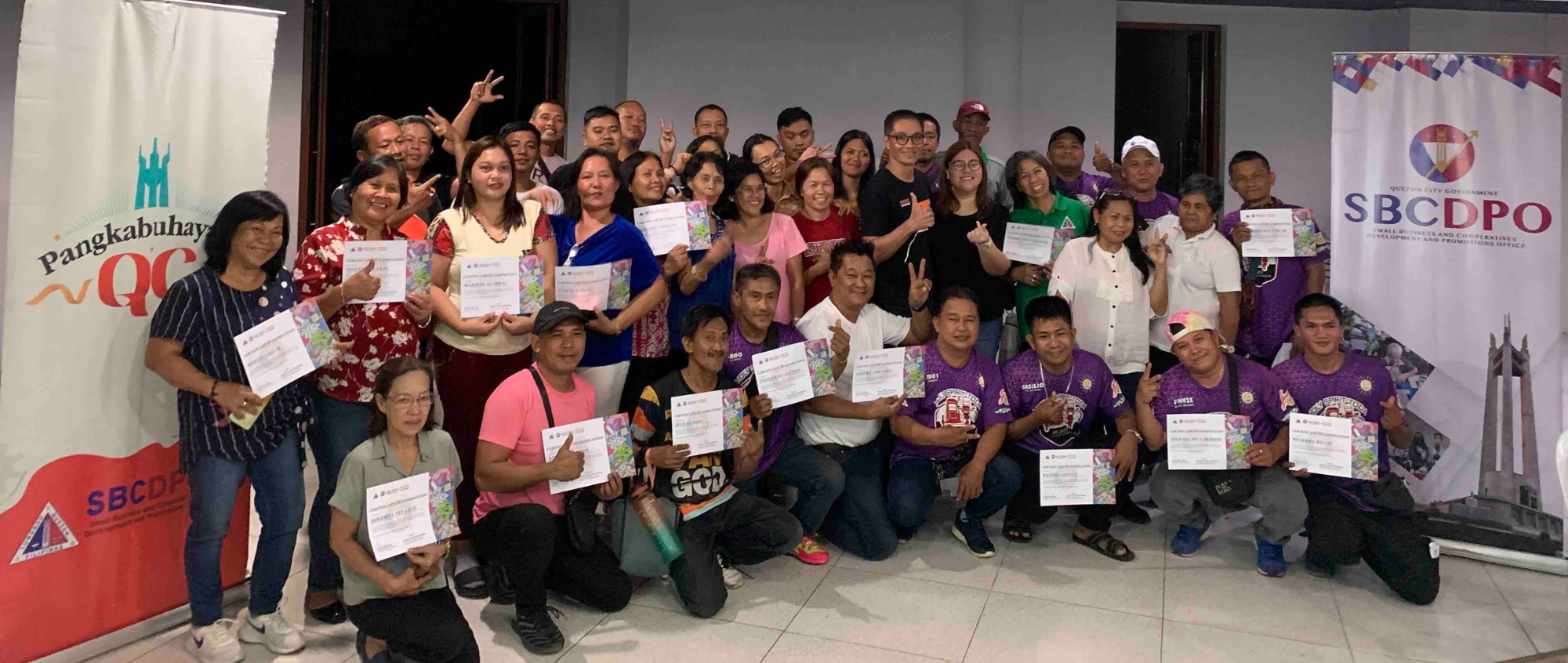
Twenty urban farmers and 15 tricycle operators and drivers, together with their spouses or family members, from QC barangays of Holy Spirit, Riverside and Commonwealth completed their three-day entrepreneurship training under the Pangkabuhayan QC Project.

The Pangkabuhayan Project is QC’s livelihood assistance project for underprivileged sectors such single parents, differently abled individuals, senior citizens, farmers and daily wage earners. The Pangkabuhayan Project provides entrepreneurship training and financial assistance to these sectors in order for them to start or improve their enterprises.

The training which was conducted and facilitated by Move to Change Foundation, Inc. (M2C), a non-government and non-stock social enterprise.  M2C’s advocacy is to enable the youth, supported by families and communities, working together to achieve their dreams and potential, creating positive change and sustainable development.

The training consisted of family values formation, financial literacy, and enterprise development modules. The training taught the participants how to nurture healthy relationships in the family which is essential in the success of any family business.  It also presented tools and techniques in running a business and making wise business and financial decisions.  The training was a combination of lectures and workshops.

M2C collaborated with the QC Government in this project as part of their overall strategy of engaging the private sector in community development. The opening and closing ceremonies were led by Ms. Mona Celine Yap, Department Head of QC’s Small Business and Cooperatives Development and Promotions Office (SBCDPO) and Mr. Eo Masilungan, Prime Mover of M2C’s Family, Education and Social Enterprise (FamilESE) Program.

Written by: Tess Perfecto (FamilESE Program Team Member)

Two-Way Learning: A Push for Inclusivity and Democracy in Education

When we think of “learning,” we usually envision a classroom—with a teacher and students—where the teacher imparts their knowledge, while the students sit and absorb knowledge. These days, however, learning no longer means a one-way process. Students no longer passively absorb information from the teachers.

Two-way Learning is a process where the teacher and the student learn from one another. It may start with the teacher discussing a theory, and then posting prompt questions that engage the students to think of why this theory is important in their practice. As the theory is applied, the students can then discuss with the class the results of their practice and even challenge the applicability of the theory in their contexts. In turn, the teacher learns the universality or limitations of that theory, having been applied in different ways by the students.

One example of this in our education system is when teachers take the time to build a good relationship with their students. For example, in the beginning of classes, the teacher may take time to co-create the learning environment. Setting expectations and creating class agreements that the class will follow in its duration. Taking time to also check with the students’ progress in their classes or giving time for consultation are also ways that this process of Two-way Learning can occur.

This process shows how learning is reciprocated,* by ensuring that students are part of the whole learning process. That their specific needs are also identified and catered due to the rapport built by the teacher over time.

Two-way Learning also humanizes our education system. It recognizes that each and everyone in the classroom is a resource of knowledge. People’s various experiences and contexts can be valuable to others, providing them with yet another rich source of ideas and practices that cannot be found in textbooks or searched on the internet.

Two-way Learning is also a way to create an active and participatory learning environment, as teachers are no longer seen to have the monopoly of knowledge. Instead, they serve merely as facilitators of learning sessions where students are more than welcome to discuss and share insights about the topic. Thus, Two-way Learning democratizes learning by giving everyone a chance to be a source of knowledge.

As we celebrate the International Day of Education this January 24th under the theme “learning for lasting peace,” the practice of Two-way Learning recognizes the very basic core of education—it is a human right.**

We need more spaces of non-discrimination and democratization in education, that is why Move to Change Foundation created the Changemakers Scholarship Program (CSP)

In this program, we recognize that students are gifted with multiple intelligences and that academic excellence does not just mean “high grades.” That academic excellence also means possessing a strong desire for continuous learning, the grit to fulfill their dreams, and the potential to be changemakers in society.

The program also fills the gaps within traditional school systems by providing socio-emotional learning, life skills, change making skills, and others. As well, it bridges the economic gaps and their dire consequences such as the lack of opportunity to gain new experiences or explore talents the scholars may possess.

At the core of CSP, we practice the model of Participatory Development. This is a process through which groups and communities determine through inclusive dialogue and consensus their development priorities and design solutions that address their priority needs.*** The end goal of this program is to reach a point where scholars, without the push of Move to Change, are able to design and engage in change making initiatives that provide sustainable solutions to societal or environmental issues that they would like to prioritize.

Under the Changemakers Scholarship Program, there are various activities that adhere to the principle of Two-way Learning:

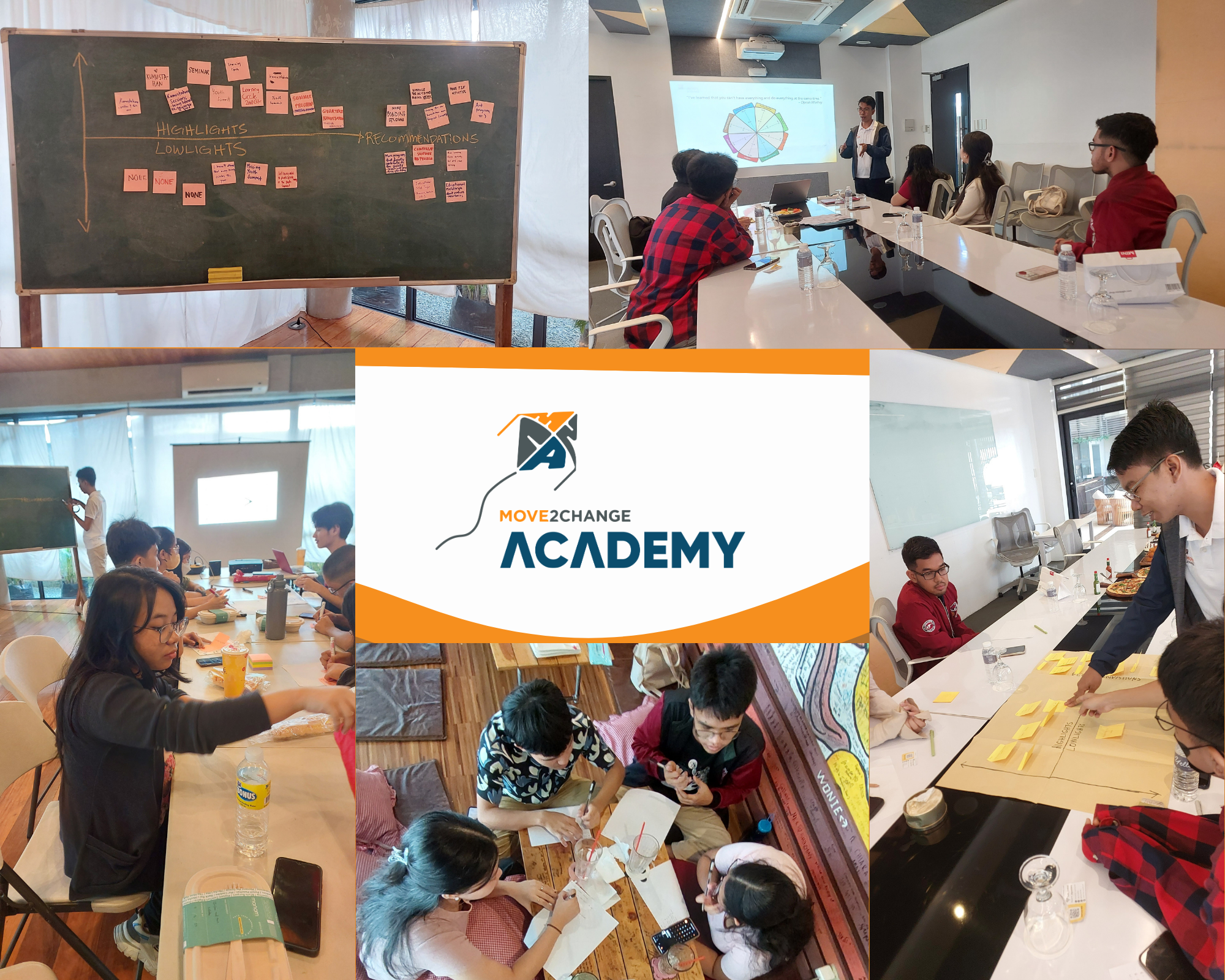
  1. Kumustahan Sessions is a check-in activity for scholars. The CSP Team checks the scholars’ progress in these three areas: leading self, leading growth, and leading others. It is the program’s way to learn more about the scholars, process the experiences they are having in their academic and personal journey, and finally guide them in areas that they think they need support and improvement.
  2. Learning Circle is a series of learning sessions that run for the entire year, curated based on the topics the scholars have chosen. Topics range from socio-emotional learning to life skills, change making skills, social skills, and the like.
  3. Year-End Review is our way of ensuring our program for the following year is co-designed with our scholars and their parents or guardians.

The CSP is a continuous work-in-progress that aims to embrace Two-Way Learning at its core, along with Participatory Development, in order to create a learning community of changemakers ready to give solutions to the needs of the country, the society, and the world.

This model at the heart of our program contributes to the essence of Two-way Learning and its capability to remove discrimination, practice democracy and humanize how people can learn and be educated. The scholars are not the only ones that learn in the process of this program, but also the parents and how their support can affect their children’s schooling, and even stakeholders that can help us push for opportunities that go beyond the usual grade limitations of traditional school systems. Ultimately, as this series of co-designing with the community continues, it helps the CSP Team tailor-fit the activities to the needs that the community sees for themselves. It helps us know better in guiding them to become change makers we aspire the world to have.

This International Day of Education, let us practice learning that does not discriminate, that promotes democracy and inclusivity and believes in the capability of one another to be bearers of knowledge. Let us look into how we can espouse Two-Way Learning in every opportunity, both inside and outside of the classroom. Together, let us move to change the face of education. That education is a process to learn from one another and understand each other despite our differences. #


List of References:

* Two-Way Learning | Harvard Graduate School of Education. (2016, January 26). Www.gse.harvard.edu. https://www.gse.harvard.edu/ideas/usable-knowledge/16/01/two-way-learning

** International Day of Education | UNESCO. (n.d.). Www.unesco.org. https://www.unesco.org/en/days/education

*** What is Participatory Development. (n.d.). Www.unm.edu. https://www.unm.edu/~soc101/participate.htm

Written by April Grace Garcia (CSP Team Member)

– Guided by Mark Lee Babaran (CSP Prime Mover) and Chona Sebastian, PhD (Move to Change Co-Leader)

Performance Report

Move to Change was established in 2019 and has grown since then. Read through our performance report to know more about what we’ve been doing lately.

Download here.

Move to Change was established in 2019 and has grown since then. Read through our performance report to know more about what we’ve been doing lately.

Download here.